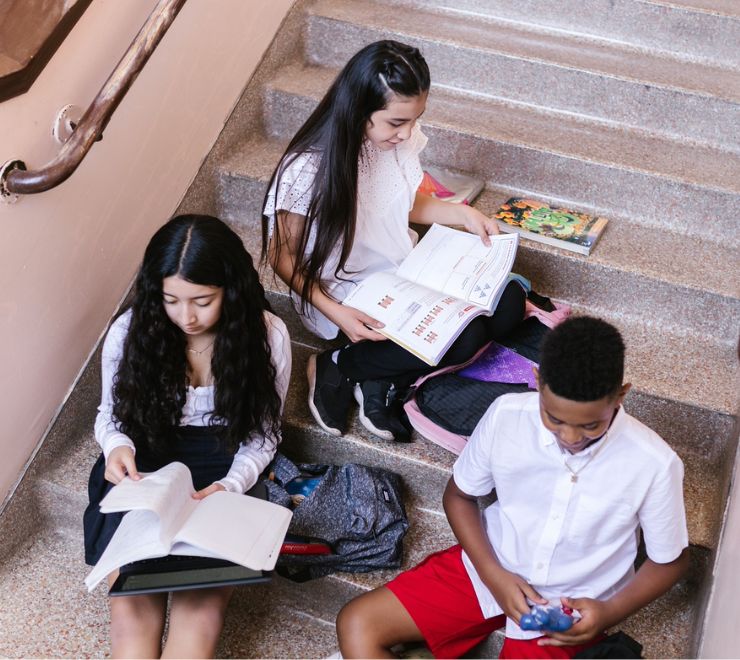
On the first day at her new school, thirteen-year-old Lina arrived early.
She had carefully chosen her clothes the night before, packed and repacked her backpack, and practised saying her teacher’s name until she was sure she could pronounce it correctly. Still, as she walked through the crowded hallway, she felt as though everyone could tell she was new.
At lunchtime, the cafeteria was louder than she expected. Groups of students filled the tables, laughing and talking about things Lina did not understand yet—teachers she had never met, sports teams she did not know, and jokes that seemed to have begun long before she arrived.
Holding her lunch tray, Lina searched for an empty table.
There wasn’t one.
She considered eating in the hallway or telling a teacher that she wasn’t hungry. Then she noticed a girl at a crowded table quietly move her backpack from the chair beside her.
“There’s a seat here,” the girl said.
That was all.
She didn’t ask Lina why she had an accent. She didn’t ask where she was “really” from. She simply made room.
Lina sat down.
At first, she mostly listened. Someone complained about math homework. Someone else told a terrible joke. The girl beside her introduced herself as Maya and asked Lina whether she liked basketball.
By the end of lunch, Lina had laughed twice.
It may not sound like much, but to Lina, that empty seat meant something important: You can belong here.
Months later, Lina noticed another new student standing alone in the cafeteria. He was holding his tray and looking around the room with the same uncertain expression she remembered so well.
Without thinking, Lina picked up her backpack from the chair beside her.
“There’s a seat here,” she said.
Sometimes kindness is not a grand gesture.
Sometimes it is simply noticing someone who feels invisible and making a little room.
And sometimes one empty seat can become a place where belonging begins.
Kids Help Phone (KHP) is honoured to share creative content submitted by youth from coast to coast to coast as they Feel Out Loud with us. We thank the Feel Out Loud Community Creator of this piece for their contribution to youth mental health and well-being in Canada. For more information on the Feel Out Loud Community Creator Space and / or how you can submit your own creative content for possible publication, you can visit the submission page.